|
For 2005, the company developed a new GTC handling package and Superamerica version (a limited run of 559 convertible variants of the coupe), along with upping the power from 515 hp (384 kW) to 540 hp (402 kW). A base-model 575M Maranello costs US$224,640. The technical specification of the engine speaks for itself: 366 cu in displacement, a specific power output of 103 bhp/liter (a first for a naturally aspirated production engine of this displacement). Twin overhead camshafts per cylinder bank boast continuously variable timing on both inlet and exhaust cams to optimize torque delivery and drivability at both low and high revs. A twin-plate, low inertia clutch in unit with the engine also helps lower the centre of gravity. Chain driven distribution reduces noise and is maintenance-free. The Fiorano’s V12 engine delivers a maximum torque of 446 lb-ft at 5,600 rpm and means that the car pulls well at all engine speeds. The new model’s breathtaking sportiness is due in part to record maximum revs for an engine of this displacement (apart from the Enzo). |


 |
 |
The 599 GTB Fiorano is the succesor of the Ferrari 575M Maranello launched in 2002 - an updated Ferrari 550 featuring minor styling changes from Pininfarina. Updates from the 550 include a renewed interior, but with substantial improvements inside, including bigger brake discs, a larger and more powerful engine, a different weight distribution, refined aerodynamics and fluid-dynamics and an adaptive suspension set-up (the four independent suspensions are also controlled by the gearbox, to minimize pitch throughout the 200-milliseconds gear shift). Two six-speed transmissions are available, a conventional manual gearbox and, for the first time on a Ferrari V12, Magneti Marelli’s semi-automatic (sequential) ’F1’ gearbox. The model number refers to the engine’s capacity in litres, whilst the ’M’ is an abbreviation of ’modificato’ or ’modified’. |
|
Ferrari today took the wraps off of its pentagram-wheeled 599 GTB Fiorano, which replaces the 575M Maranello. The Fiorano gets the new, six-liter V12 Ferrari’s had in the lab for several years, working out how to wring 620 hp (at 7,600 rpm) from thousands of what appears to be haphazardly placed metallic parts. It also rides atop a new, all-aluminum space frame, developed in partnership with Alcoa, the lightness of which helps give the 599 a zero-to-60 time of 3.7 seconds (though the SuperFast F1 gearbox offers considerable assistance as well). It also has a magnetoheological suspension system, which adjusts the dampers by applying an electronically controlled magnetic field, kind of like a levitating Maglev train.
Fiorano after the circuit Ferrari uses to hone the performance of its track and road cars;
GTB as in Gran Turismo Berlinetta after the most famous Ferrari berlinettas ever built; and
599 to reflect the displacement of its V12 engine divided by 10. The stunning new all-aluminum two-seater that Ferrari is unveiling at the
2006 Geneva Motor Show is summed up rather succinctly by its own name and delivers everything that this promises. The
Ferrari 599 GTB Fiorano, in fact, sets a new benchmark of excellence in the sport car world.
Its maximum power output is 620 bhp at 7,600 rpm with a maximum engine speed of 8,400 rpm. Particular attention was also paid to fuel consumption which is the same as in the previous model, under similar use, despite a significant leap in performance. Development work for the Ferrari 599 GTB Fiorano also focused specifically on the distinctive sound the engine makes, reducing mechanical resonance in favor of a pure V12 soundtrack from both the intake manifold and the exhaust system. This not only enhances driving pleasure but makes for a quieter ride inside the cabin itself.
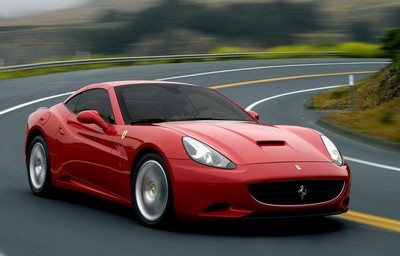
The Ferrari 599 GTB Fiorano is a strikingly sculptural car. The design is so supple, in fact, that each new angle brings something new to light. Its forms say it all about its extreme sportiness yet still retain a unique sophistication.
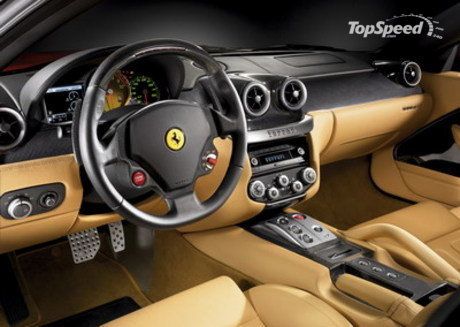
A balance has been struck in the interior between the car’s sporty vocation and the feeling of intimacy and safety that only skilled hand-crafting and detailed personalization can achieve. The passenger areas of the car are trimmed in sumptuous leather while the driver area and controls boast more high-tech detailing in carbon-fiber and aluminum.
In addition to the steering wheel and manettino, the central rev counter with a choice of red or yellow background and solid aluminum passenger controls, the new
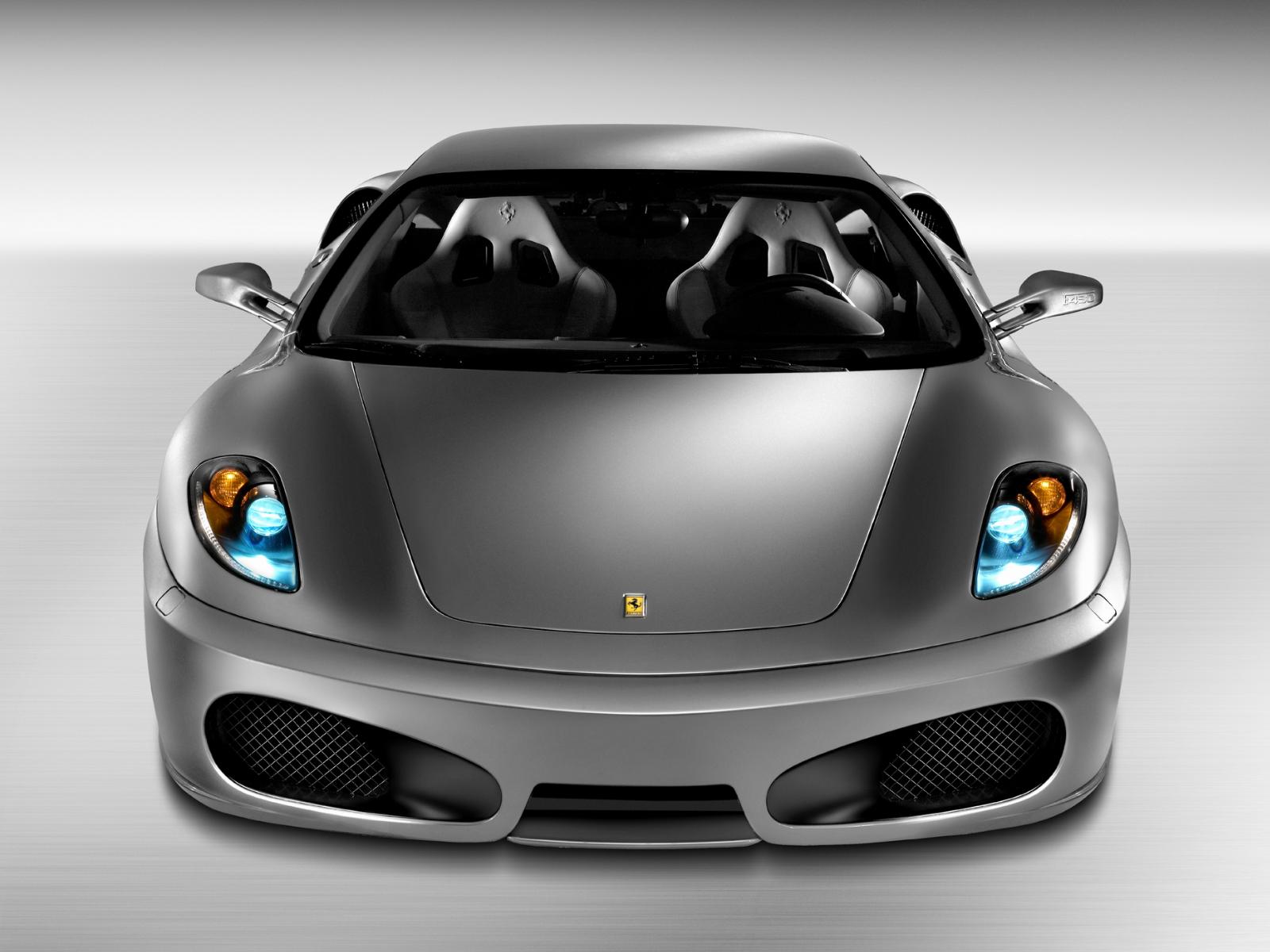
Ferrari 599 GTB Fiorano also boasts attractive new styling cues including a central grip to provide extra support for the passenger and new adaptive racing seats featuring carbon-fiber side rests. Other standard accessories include front bi-xenon headlamps and rear LED lights, dusk and rain sensors, dual-zone climate control, electrically adjustable steering-wheel column, hideaway radio/CD player and key with integrated volumetric anti-theft device with motion sensors.
The Ferrari 599 GTB Fiorano also benefits from an already vast choice of personalization options available for every Ferrari model. Four areas are covered by this program: Racing and Track, Exteriors and Colors, Interior and Materials, Equipment and Travel.
Interior and Materials options include a new Enzo Ferrari-inspired carbon-fiber steering wheel with LED rev display which can be specified along with a special carbon-fiber trim kit for the door panels, instrument panel, gear stick surround and sill kick panels. Various types of leather trim are also available for the seats and interior too. Travel and Equipment accessories include front and rear parking sensors, iPod-friendly set-up, satellite anti-theft system and a luggage set specially tailored to fit this model.
The Ferrari 599 GTB Fiorano boasts class-leading power thanks to its 5,999cc V12 - derived directly from the Enzo Ferrari supercar - which produces no less than 620hp at 7,600 rpm for a weight/power ratio of just 2.6 kg per horsepower.
Ferrari has adopted the latest evolution in its tried and tested all-aluminium construction technology for the body and chassis. The unmistakable Pininfarina design gives the Ferrari 559 GTB Fiorano aggressive yet elegant lines which are perfectly integrated with the advanced aerodynamic solutions adopted to reach the performance figures attainable.
This new model is the symbol of Ferrari’s production - the V12 berlinetta - and represents the latest interpretation of a theme that has seen such classics as the 250 GT, the 275 GTB, and the 365 GTB4. The Ferrari 599 GTB Fiorano replaces the last in that great line of berlinettas, the 575M Maranello, of which - together with the 550 Maranello introduced in 1996 - no fewer than 5,700 have been produced, a record for this type of model for the Prancing Horse.
----
The front-mid engined Ferrari 599 GTB Fiorano two-seater replaces the 575M Maranello berlinetta (sold in Europe for around 200,000 Euros), of which, together with the 550 Maranello introduced in 1996, some 5,700 units have been produced. On the power side, the Ferrari 599 GTB Fiorano boasts a 6-litre V12, which was derived from the engine that powered the Enzo supercar, developing 620 hp at 7,600 rpm.
With an Alcoa all-aluminium space frame chassis and bodywork, weight-power ratio remains under 2.6 kg/hp. The new model is named Fiorano after the circuit Ferrari uses to test the performance of its track and road cars; the GTB comes as in Gran Turismo Berlinetta; and 599 for the 5999 cc of its V12 engine.
Nothing can express performance like figures. The new Ferrari 599 GTB Fiorano sprints from 0 to 60 mph in 3.7 seconds, with a top speed in excess of 205 mph.
This new model was designed with several specific objectives in mind: to surpass the intense driving pleasure of such renowned models as the
F40, to guarantee stunning performance courtesy of its highly innovative content and technology transfers from the F1 single-seaters, and to deliver superior standards of roominess, comfort, ergonomics and safety. The result is the absolute pinnacle of achievement in terms of thoroughbred Ferrari sportiness and technology.
Figures are expressed in the technical specification of the engine too: 5999 cm3 displacement getting a specific power output of 103 hp/litre, and that’s without any direct or turbocharging. Such a figure is a first for a naturally aspirated production engine of this displacement.
The Fiorano’s engine delivers a maximum torque of 448 lbs-ft at 5,600 rpm, pulling the car well at almost any engine speed. The twin overhead camshafts per cylinder bank come with continuously variable timing on both inlet and exhaust cams to optimise torque delivery and drivability at both low and high revs. Chain driven distribution reduces noise and is maintenance-free, while the twin-plate, low inertia clutch in unit with the engine helps lower the centre of gravity.
The steering wheel-mounted manettino vehicle dynamics control switch, originally developed for the 1996 Formula One season, has been taken a step further for the new Ferrari 599 GTB Fiorano. It now integrates the stability and F1-Trac traction control systems, the F1-SuperFast gearbox and the SCM (Magnetorheological Suspension Control) fluid suspension (see below).
The GTB Fiorano, earns its way onto this list for its sheer beauty. It features gorgeous proportions and stunning styling, done by long-time Ferrari partner, Pininfarina. Its beauty is combined with what Ferrari boasts is the most powerful engine for a 12-cylinder berlinetta ever. The six-liter V12, developed from the engine that powers the Enzo super car and paired with a new-generation F1 gearbox that makes its debut on the car, delivers 620 horsepower.
Inside, the Ferrari 599 GTB Fiorano cabin is trimmed in leather while the driver area and controls boast more high-tech detailing in carbon-fibre and aluminium.
In addition to the steering wheel and manettino, the central rev counter with a choice of red or yellow background and solid aluminium passenger controls, the new Ferrari 599 GTB Fiorano also boasts attractive new styling cues including a central grip to provide extra support for the passenger and new adaptive racing seats featuring carbon-fibre side rests.
Other standard accessories include front bi-xenon headlamps and rear light-emitting diodes (LED) lights, dusk and rain sensors, dual-zone climate control, electrically adjustable steering-wheel column, hideaway radio/CD player and key with integrated volumetric anti-theft device and motion sensors.
----
The new Ferrari 599 GTB Fiorano has parking sensors and a navigation system with a big colour screen. It has as many speakers (11) for its Bose sound system as it does air intakes. It has headlight washers and power seats that not only have heat, but also power-adjustable side bolsters and lumbar supports.
The 599 is bigger than its predecessor, the 575 Maranello, with more trunk space (240 litres) and more fuel capacity (105 litres) for greater range; its cabin is roomier, more comfortable and better equipped. And its suspension features magnetic ride control technology first used by Cadillac, of all companies.

Rated at 612 horsepower, the 3,722-pound 599 GTB rivals many barely legal, slightly disguised racecars with its 6.1-pound/hp weight-to-power ratio. Launched properly and shifted via the improved F1-Superfast six-speed transmission, Ferrari claims a 3.7-second 0-to-62 mph (100 km/h) time. The wind-tunnel-tested
Pininfarina-sculpted body and undercarriage produce more than 400 pounds of downforce at 186 mph on the way to a claimed top speed in excess of 200 mph. The optional carbon-ceramic brake discs look like they came directly from a Le Mans racer. The semiactive suspension works miracles on nearly any surface. Yet the two-seat coupe can be driven comfortably, safely and with confidence all day, every day while it carries 11.3 cubic feet of luggage - custom-tailored.
The unmistakable 12-cylinder shriek of the V12 under hard acceleration changes to a guttural hum at part throttle and nearly disappears at cruising speeds where wind noise is the only indication of pace. With 11 airflow paths through and around the car helping to create the discernable downforce, it seems only natural to hear the wind rushing over the car when traveling over 100 mph.
With a claimed 3.7-second 0 to 60 mph time, the 599 is a blisteringly fast car, with slingshot acceleration pretty much no matter what gear you’re in, or how fast you’re already going. Top speed is more than 205 mph.
The new transmission software actually allows the clutch and gearshift to operate simultaneously, whereas it would once push the clutch in, change gears and release the clutch one step at a time.
The 599 GTB’s transmission is able to shift gears in 100 milliseconds (0.1 second), compared to the 575M’s 250 ms, or even the F430’s 150 ms. To put this in perspective, current Formula 1 racecars shift in about 50 ms.
The 599’s traction control system, dubbed F1 Trac, uses the same operating logic and software as the F1 cars to manipulate the brakes and throttle in low-traction situations (which happen a lot, when you have 620 horses going to the rear wheels). The result is simply amazing: despite the two-seat Ferrari’s massive power and torque, you can barely feel the traction control working even when you’re fully on the gas out of a corner: there’s none of the stuttering or hesitation you feel with most traction or stability control systems and the car’s javelin-like forward motion seems barely impeded at all.
The car remains so flat while cornering and so connected to the surface that all the usual indicators (body roll, tire squeal, sliding) of a car "being out of shape" are virtually erased. We found the only method to determine the traction envelope was by gauging neck muscle strain under braking and cornering.
Its weight distribution is actually 47 per cent front/53 per cent rear, giving it handling that’s more characteristic of a mid-engined sports car than one with a V12 in front of you. The rear end will only step out if you explicitly ask it to and even then, only if you’ve dialled the F1-style manettino rotary selector on the steering wheel past its normal mode and into ’sport’ or ’race’ which progressively relaxes the traction control, speeds up gearshifts, alters the suspension’s reactions and makes the throttle response more aggressive.
The body and structure are all-aluminum and despite its extra size, the 599 is actually 20 kg lighter than the 575. It also concentrates 85 per cent of its mass within its longer wheelbase. The aluminum structure is not only lighter but it’s stiffer than steel which improves both refinement and performance. ’Refinement’ because a stiffer body is actually quieter and ’performance’ because it allows engineers to more precisely tune the suspension - and that further improves refinement because the suspension doesn’t have to be overly stiff to compensate for a wobbly body.